

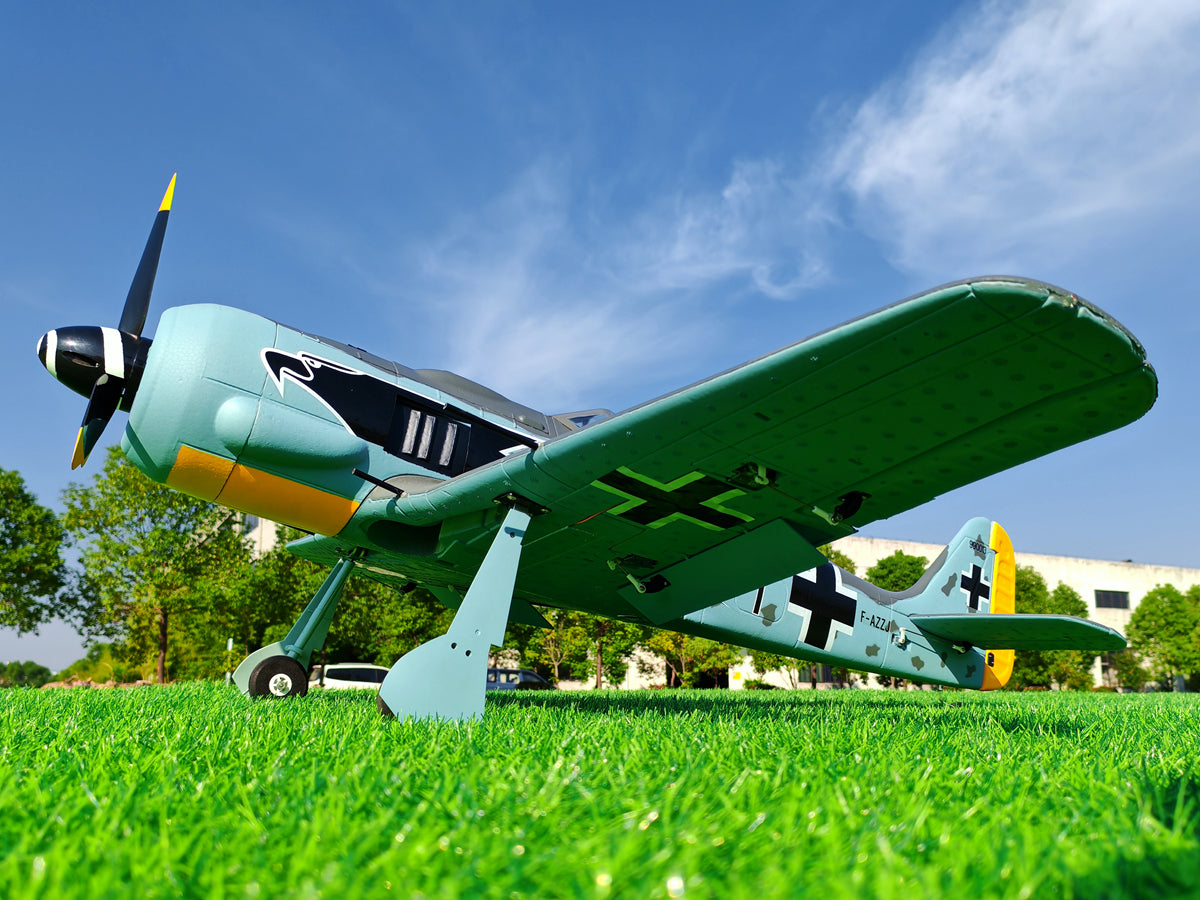
When it comes to setting up retractable landing gear on an RC airplane, precision and attention to detail are essential. Over the years, I’ve flown a variety of aircraft, including the Dynam Focke Wulf FW-190 V3 4S RC Warbird Plane, and one thing I’ve learned is that the proper setup of retractable landing gear can drastically improve both the functionality and realism of your RC plane. In this article, I’ll guide you through the essential steps for setting up retractable landing gear, share my personal experiences with the Dynam FW-190, and address common questions that arise during the process.
What Is Retractable Landing Gear?
Retractable landing gear is an advanced feature in RC aircraft that allows the wheels to be retracted into the plane’s fuselage or wings when in flight. This feature is primarily seen in scale warbirds and other high-performance models where aerodynamics and realism are key. Not only does it make the aircraft look more like a real fighter plane, but it also reduces drag during flight, contributing to better performance.
The Importance of a Proper Setup
Setting up retractable landing gear is not just about making the plane look good; it also impacts the overall flight performance. A misaligned or improperly set-up gear can cause the wheels to get stuck or fail to retract correctly, which may lead to crashes or malfunctions. During my experience with the Dynam Focke Wulf FW-190, I learned that a proper setup ensures smooth takeoffs, landings, and a more enjoyable flying experience.
1. Choose the Right Retractable Gear
First and foremost, choosing the right retractable landing gear for your RC planes is critical. There are many types of retract systems on the market, including electric and air-powered systems. The Dynam FW-190, for example, comes with a reliable electric retract system, which I personally prefer for ease of maintenance and setup. Electric retract systems are powered by servos and are easier to install and operate than air-powered retracts.
Here are some key factors to consider when choosing your retract system:
- Weight of the Plane: Make sure the retract system can handle the weight of your aircraft.
- Compatibility: Ensure the retract system is compatible with your plane’s design.
- Durability: Look for a system that can withstand the stresses of regular takeoffs and landings.
- Ease of Use: Electric systems are often simpler to install, while air systems might require a bit more work but can be more durable.
2. Mounting the Retractable Landing Gear
Once you’ve chosen the right retract system, the next step is mounting the gear on your aircraft. This is the critical part of the setup, as the gear needs to be aligned properly to ensure smooth retraction and extension. When I set up the retractable landing gear on my Dynam FW-190, I took the following steps:
- Check for Space and Fit: Before drilling any holes, ensure that the retractable gear fits within the fuselage or wing. For the FW-190, I found that the landing gear was well-designed for a perfect fit. However, always double-check that the mechanism won’t interfere with other components like servos or control rods.
- Secure the Mounting Points: Carefully secure the retract system to the fuselage or wing using screws or mounting plates provided by the manufacturer. Make sure the retract mechanism is tightly secured, as any looseness can cause malfunction during flight.
- Align the Gear: It’s essential to ensure the landing gear is aligned both horizontally and vertically. Use a level to ensure the wheels are in the correct position for both retraction and extension.
- Test the Movement: After mounting the gear, manually test the retractable mechanism by activating it with your transmitter. Ensure that the gear retracts fully and smoothly, without binding or hesitation.
3. Linking the Retracts to the Receiver
Once the gear is securely in place, the next step is linking it to your receiver. This is where the magic happens—the retract system should be connected to a dedicated channel on your receiver, typically an AUX channel, so you can control the gear’s deployment and retraction from your transmitter.
- Choose the Right Channel: For my Dynam FW-190, I connected the retractable landing gear to Channel 5, but the exact channel may vary depending on your transmitter and receiver setup.
- Adjust Servo Travel: One of the most common mistakes when setting up retracts is failing to adjust the servo travel. Ensure that the servo can extend and retract the gear fully. Use the endpoints in your transmitter to fine-tune the servo travel for optimal performance.
- Adjust Retract Speed: Some transmitters allow you to adjust the speed of the retract mechanism. I prefer to set a moderate speed to replicate the look of a real plane’s retract system.
4. Fine-Tuning and Testing
The final stage is all about fine-tuning. After mounting the gear and linking it to the receiver, take your aircraft to the field and perform some ground tests. Before taking off, manually retract and extend the landing gear a few times to ensure everything is working smoothly. Make adjustments as needed to the servo travel, trim, or gear alignment.
5. Flying with Retractable Landing Gear
Flying with retractable landing gear adds a layer of realism and enhances the overall experience. In my experience with the Dynam FW-190, the retract system has worked flawlessly. However, I’ve learned to always check the gear’s function before flying—nothing can ruin a good flight more than gear malfunctioning mid-air.
When it’s time to land, ensure the gear is fully extended. This is especially important during your final approach, as retractable gear systems sometimes fail to deploy under certain conditions. Always have a backup plan in case the gear fails.
FAQ: Common Questions About Retractable Landing Gear
1. What type of retractable landing gear should I choose for my RC plane?
It depends on the size and weight of your aircraft. For smaller models, electric retract systems are a good choice due to ease of installation. For larger planes, air-powered retracts might be more durable.
2. How do I know if my retractable gear is working properly?
Test the gear before each flight. Check for full retraction and extension and ensure that there is no binding or hesitation. Also, verify that the gear stays in the retracted position during flight.
3. Can I install retractable landing gear on any RC plane?
Not all RC planes are designed to accommodate retractable landing gear. It’s best to choose a plane with pre-designated space for retracts, or consult the manufacturer for compatibility options.
4. How do I prevent retractable landing gear failures?
Regular maintenance is key. Check the gear’s alignment, servo travel, and servo function before every flight. Also, avoid rough landings, which could damage the retract mechanism.
5. Should I fly with the landing gear retracted during every flight?
No. Always ensure that the landing gear is deployed during takeoff and landing. Keep it retracted only when you’re flying at cruising altitude, and never during the approach.
Conclusion
Setting up retractable landing gear can be a rewarding experience, adding a level of realism and sophistication to your RC aircraft. Whether you’re flying a Dynam Focke Wulf FW-190 like I do, or any other model, taking the time to properly install and adjust the retract system is worth the effort. With the right setup, you’ll be able to enjoy smoother landings and a more authentic flying experience.
By following the steps above, you can ensure that your retractable landing gear performs flawlessly every time you hit the runway.
